My Dog Says You Have Prostate Cancer
My Dog Says You Have Prostate Cancer
A recent study in France concluded that dog can be trained to detect Prostatic Cancer antigen (PCa) by smelling a client’s urine. Researchers Jean-Nicolas Cornu , Ge´raldine Cancel-Tassin , Vale´rie Ondet , Caroline Girardet , and Olivier Cussenot also affirm that Volatile Organic compounds (VOC’s) in urine are probable biomarkers of cancer.
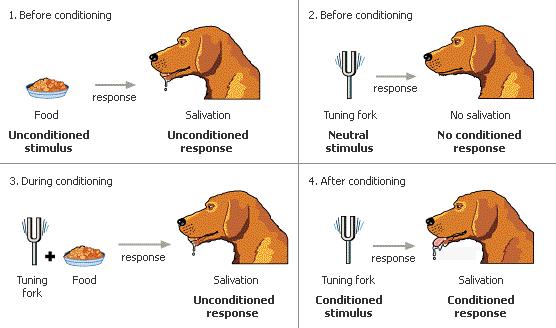 A Belgian Malinois shepherd was trained by a professional and dedicated team of two people from the beginning to the end of the study. The dog belonged to the French Army veterinary department and was chosen among young dogs destined for explosives detection training. The dog was never trained before. The first objective was to teach the dog to discriminate between urine from individuals with PCa and urine from controls. The dog was trained by the clicker training method (a kind of operant conditioning). Operant conditioning is distinguished from classical conditioning (also called respondent conditioning) in that operant conditioning deals with the modification of "voluntary behavior" or operant behavior. Operant behavior "operates" on the environment and is maintained by its consequences, while classical conditioning deals with the conditioning of reflexive (reflex) behaviors which are elicited by antecedent conditions. Behaviors conditioned via a classical conditioning procedure are not maintained by consequences.
 The dog was given his ball as a reward for alerting to a cancer urine. The dog was taught to sit in front of the sample of urine recognized as cancer. Training was a full-time job for the team, who worked with the dog 5 d/wk over the study period (October 2007 to June 2010). During the training phase, runs were not blinded and the dog was always presented cancer urines and full, undiluted control urines. Total duration of the training phase, from the initial phase of learning through the unblended exercises phase, was 16 months. Operant conditioning is the use of a behavior's antecedent and/or its consequence to influence the occurrence and form of behavior.
Urine samples were obtained from Caucasian patients recruited in our tertiary reference center who had given written consent for analysis of their urine for research programs, including genetic analysis. All men included were referred to a urologist because they had an elevated PSA level or abnormal findings on digital rectal examination (DRE). Data collected at the visit were age, height, weight, PSA level, and DRE data. Urine was collected during the first consultation after DRE. All patients underwent prostate biopsies according to a standard procedure (12 cores) and were classified as cases or controls after pathologic examination of the specimens. Patients were not selected in case of history of urothelial carcinoma or other malignant disease. There were no exclusion criteria regarding other medical history, alcohol consumption, drugs, food, tobacco consumption, or other habits. A total of 108 patients supplied urine. Forty-two urine samples (26 cancers and 16 controls) were used for the training phase, and 66 patients were tested in the double-blind phase. Patients studied in the double-blind phase were 33 PCa cases and 33 controls, as determined by prostate biopsy.
The double-blind testing phase consisted of consecutive runs. For each run, the dog was presented six samples (five controls and one cancer). During each run, the cancer urine was one of the 33 selected cancer samples and the 5 control urines were samples randomly selected among controls. Samples were anonymized(made anonymous) and numbered so that people conducting the test were notable to discriminate cancer from control samples. The samples were frozen at _4 8C from the time of urine collection to the time of testing. Each urine sample was slowly heated to 37 8C with the same material immediately before examination in a dedicated area outside the testing room. During each run, the dog had to scent successively the six samples that were hidden in boxes. Each box had a hole so that the dog could not access the urine itself, but only its odor. After a mean time of 30 s, the dog had to sit in front of a box to designate the cancer sample. In case of success (dog sitting in front of PCa urine sample), the result was classified as a true positive and the controls as true negatives, and the next cancer sample was tested. In case of mistake (dog sitting in front of control urine sample), the control sample was classified as false positive and the cancer sample as a false negative. The false-positive sample was excluded from the pool of controls used for the future runs, and the cancer sample was retested in association with other controls. A new prostate biopsy was proposed to the patient who provided the false-positive sample.
The use of canines for cancer detectionemerged after the first case report in 1989 about a melanoma detected by a dog on his owner’s leg. The scientific basis of this ability of dogs to detect the odor signature of cancer is believed to be linked to the VOCs produced by malignant cells . Indeed, basic research studies have established that during tumor growth, protein changes inmalignant cells lead to peroxidation of the cell membrane components and produce VOCs that can be detected in the headspace of the cells. In particular, VOC analysis of exhaled breath for cancer detection (including PCa) has been recently studied with promising results. Specific detection of lung cancer based on the odor of urine samples has been recently proposed through animal models, but no specific investigation has been conducted specifically focusing on urologic tumors. Previous studies have shown that trained dogs are able to detect bladder, lung, or breast cancer in urine with better than chance probability, but no positive result was obtained for PCa. Our experience thus shows for the first time that, regularly trained by a dedicated team, a dog can distinguish a PCa urine sample among controls with powerful results. This difference from previously reported studies can be explained by our professional method of training by a dedicated team and the fact that one dog was completely dedicated to the task, with no previous training. These preliminary data reflect the existence of a potential odor signature of PCa that may correspond to one or multiple VOCs. These molecules remain unknown for the moment and should be assessed by specific gas chromatography/mass spectrometry analysis. To date, metabolomics studies have only individualized sarcosine as a potential biomarker for PCa. Although our results provide a new insight in the field, the present study is subject to limitations. First, we obtained these powerful results with one dog, and this may not be reproducible with other dogs. Indeed, the type of dog used in the study can influence the results since canine olfactory receptor polymorphisms have been shown to influence odor detection performance by sniffer dogs. Second, an intrinsic potential limitation of our work is that selected controls were patients age >50 with elevated PSA (to be comparable with cancer patients regarding these characteristics). Control patients had mean PSA value of 8.3 _ 4.1[range: 2–16.8]. Given these values, it can be considered that 20–30%of these control patients with negative prostate biopsies have PCa, according to previous reports. Consequently, seven patients considered as controls in this study should have PCa, and therefore the dog should have designated seven control samples as cancer (false positives in the study context). In our work, three samples (instead of seven expected) were classified as false positives, and one patient was found to have cancer on a new biopsy. This limited number of false positives could be related to the design of the study since the dog had to choose between cancers and controls. Indeed, patients with positive prostate biopsy may have a greater tumor volume than patients with PCa and negative biopsies. If the dog is detecting a quantitative parameter (odor of the VOC), it may choose the sample with the higher amount of VOC. Moreover, given the small number of patients studied, these results may reflect a lack of power, although they are consistent with the imperfections of prostate biopsy. However, the present work is a proof-of-principle study, and the use of these dogs is not supposed to be generalized. We tested a limited number of subjects in a costly, long study that makes it difficult to conceive of an extended use for this test in clinical practice. Potential biases of odor detection, including associated diseases and food and drink consumption, have not been explored in our protocol. However, despite this lack of information, the findings of our study are powerful and suggest that the potential biomarkers recognized by the dog overcome these potential confounding factors. Finally, results of the present study should be preliminary to further metabolomic studies focused on VOC evaluation that are currently being performed. Previously unreported, the proof of principle presented here is a step forward and is the beginning, rather than the end, of the story. This conditioned dog should be used in the near future to validate candidate molecules emerging from metabolomic screening.
The present study brings the proof that a specially trained dog by a professional team can be conditioned to recognize PCa among controls only by sniffing urine. This study opens the door of VOC detection for PCa diagnosis. Metabolomic studies should complete this approach by determining the volatile molecular signature of PCa.

Comments
Post a Comment